The 26th International AIDS Conference (AIDS 2026) took place July 26-31st in Rio de Janeiro, Brazil with the theme of Rethink. Rebuild. Rise. The world’s largest conference on HIV and AIDS, this year’s conference opened with a warning of the substantial impact that worldwide funding cuts are having on the HIV response, followed by an impassioned call to action from community activists and health leaders that pharmaceutical companies lower the cost and increase access to, innovative new treatments for countries most in need.
The conference opening concluded with a fashion show by HIV Unwrapped, an initiative that merges fashion, storytelling, and HIV research into art. The show pairs student fashion designers with HIV researchers to collaboratively flip an ordinary lab coat into a custom garment amplifying the researcher and their work in HIV. While the Canadian Foundation For AIDS Research (CANFAR) will be showcasing a Canadian HIV Unwrapped series later this year, some of their early works were displayed at the AIDS 2026 Global Village, which included a dress inspired by Dr. Zabrina Brumme’s research.
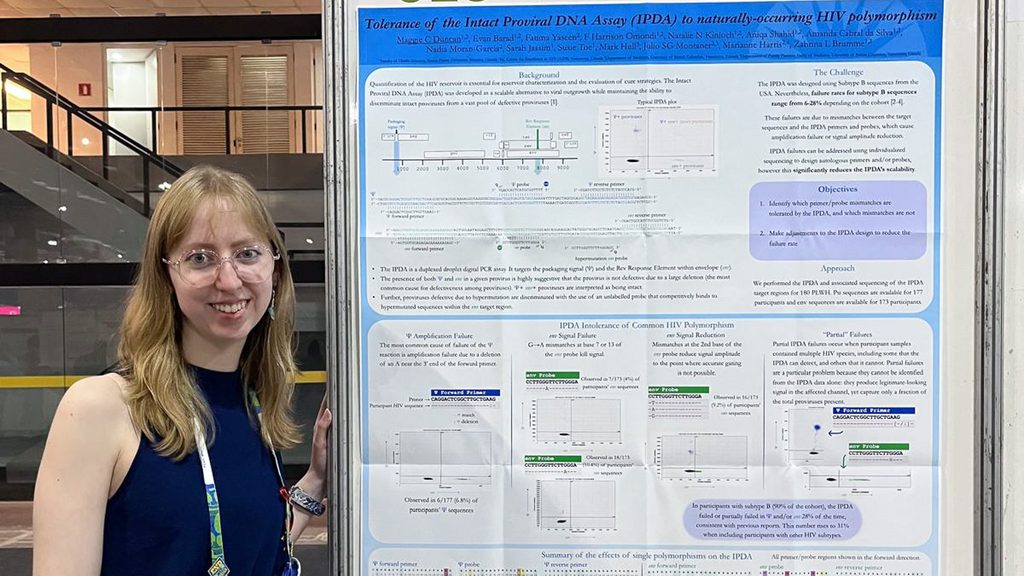
Turning to the conference proceedings, the BC-CfE was well represented with six poster presentations including Maggie Duncan, who was selected as one of 25 Young Leaders taking part in the IAS Young Leaders Programme. She met with leading scientists, researchers, IAS leaders, and people living with HIV (PLWH) to strengthen HIV research and advocacy. In addition, Duncan also presented her poster in Track A on intact proviral DNA assays (IPDA), detailing the failure rates of Subtype B sequences and her objective of finding which primer/probe mismatches are tolerated by IPDA, and which are not.
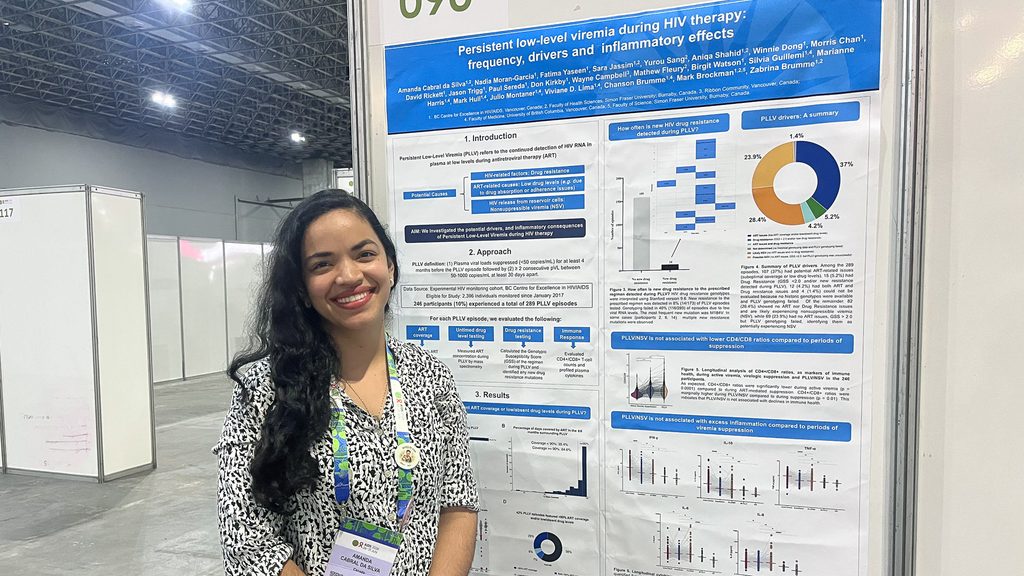
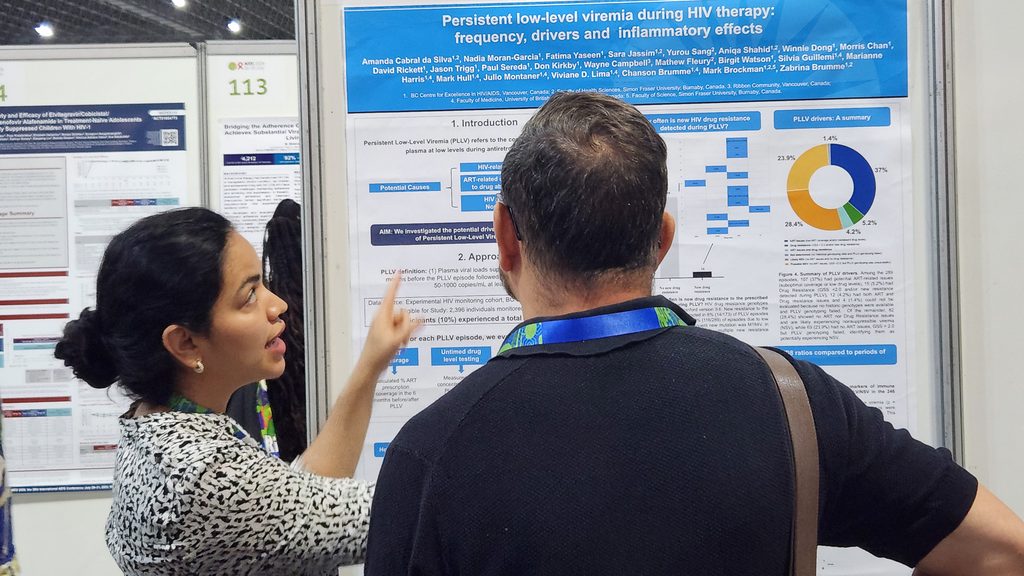
Amanda Cabral Da Silva presented her poster on persistent low-level viremia (PLLV) during antiretroviral therapy (ART) for Track B, investigating the frequency, potential drivers and inflammatory consequences of PLLV during ART/HIV therapy.
Showcasing COAST and Momentum Study data, Dr. Mark Hull presented two posters on behalf of the BC-CfE’s Epidemiology and Population Health Programs. Using COAST Study data, “Incidence of AIDS-defining illnesses continue to occur at time of diagnosis in persons living with HIV, British Columbia, Canada” examined incidence rates of AIDS-defining illnesses among people diagnosed with HIV in BC, finding that many occur within 3 months of diagnosis.
Using Momentum and COAST data in the second poster, Dr. Hull showed that gay, bisexual, and other men who have sex with men (GBM) experience higher rates of skin and soft tissue infections compared to men in Vancouver’s general population.
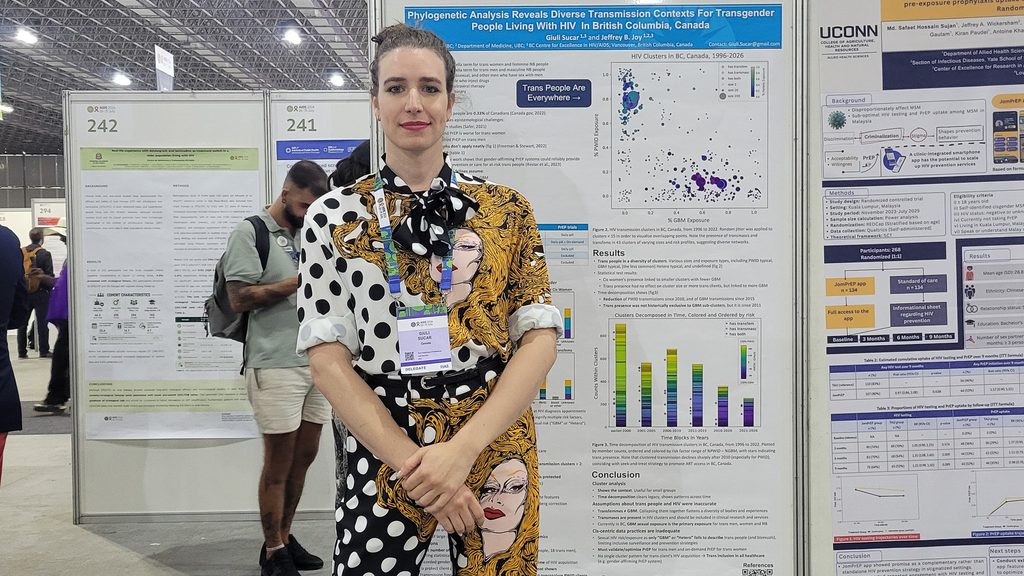
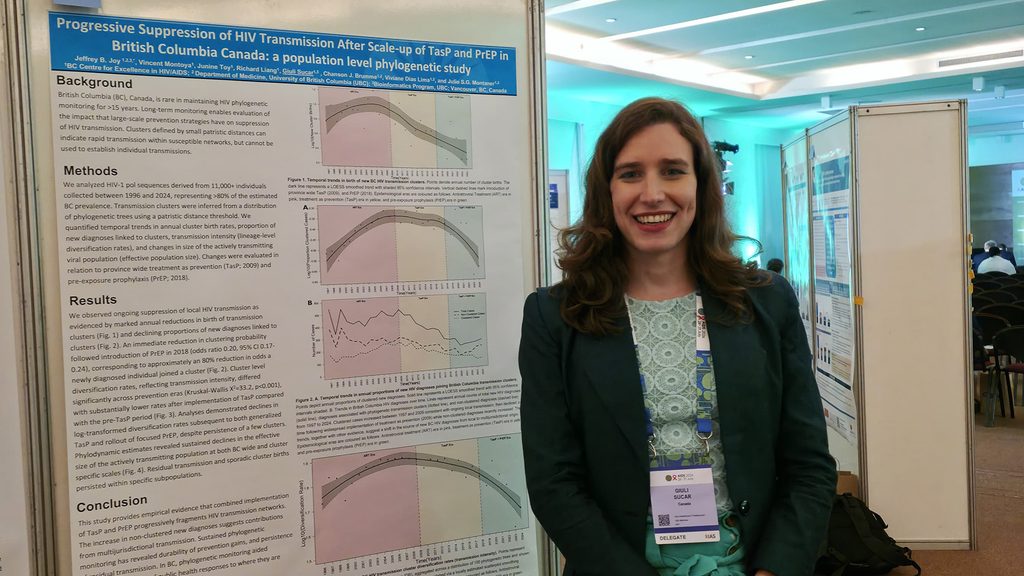
Closing out Track C, Giuli Sucar presented their poster on the diverse transmission contexts for transgender PLWH in BC through phylogenetic analysis, demonstrating the need for trans inclusion in all surveillance and prevention strategies. They also presented research on behalf of Dr. Jeffrey Joy and their lab team, providing empirical evidence of the continuing suppression of HIV transmission after scale-up of TasP® and PrEP in BC.
Thank you to all our BC-CfE team who attended AIDS 2026 and shared your important research on the global stage! While we’ve come a long way in the fight to end HIV/AIDS, AIDS 2026 is both a sobering reminder of how much farther we have to go, and a source of inspiration from the indomitable spirit of the global community of researchers, leaders, advocates and people living with HIV.