BC Centre for Excellence Celebrating 30 Years

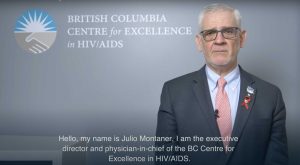
This year the BC-CfE is celebrating its 30th year of excellence. In this video, Dr. Julio Montaner, the BC-CfE’s Executive Director and Physician-in-chief, kicks off the anniversary activities, reflecting on how the Centre has grown and evolved since 1992 and thanking its patients, the staff, the numerous supporters, partners and friends.

Read More »

BC-CfE urges heightened caution due to monkeypox

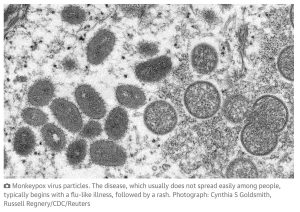
Health authorities in Canada, the US, Spain, Portugal, and the UK have issued alerts over possible outbreaks of monkeypox. This viral infection is usually spread by respiratory transmission, but in these latest cases certain characteristics point towards fluid contact as a possible mode of transmission. A majority of these monkeypox cases are among men who have sex with men.

Read More »

Chapter 1: Pre-HAART (1992 – 1996)

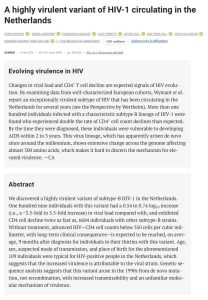
In the 30 years since its inception in 1992, the advancements made by the British Columbia Centre for Excellence in HIV/AIDS (BC-CfE) have transformed HIV from a rapidly fatal disease, to a chronic and manageable illness that is highly, and easily, preventable. By helping shape local and global policy with its Treatment as Prevention¨ strategy, the BC-CfE has quite literally revolutionized HIV/AIDS care, saving and improving millions of lives worldwide.

Read More »

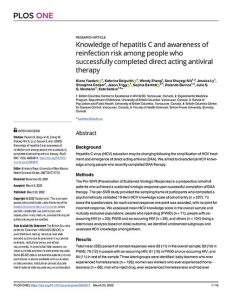
BC-CfE researchers examine HCV knowledge and awareness of reinfection risk among people successfully treated with direct acting antiviral therapy

The Hepatitis C virus (HCV) is a blood borne infection and a leading cause of end-stage liver disease. The World Health Organization estimates that about 58 million people are living with chronic HCV, leading to 290,000 deaths annually due to HCV-related liver illness. Here in Canada, HCV affects a quarter of a million people. Of this quarter million, over 40% are unaware of their infection.

Read More »

BC-CfE study examines how neighbourhood poverty affects those living with HIV

A recently published study by BC-CfE researchers titled Neighbourhood-level material deprivation and response to combination antiretroviral therapy in the Canadian Observational Cohort (CANOC): a longitudinal cohort studyexamines the relationship between a neighbourhood’s socioeconomic status and how this affects the lives and health of Canadians living with HIV who are on combination antiretroviral therapy (ART).

Read More »
Scroll to Top

The BC-CfE Laboratory is streamlining reporting processes for certain tests in order to simplify distribution and record-keeping, and to ensure completeness of results. Beginning September 2, 2025, results for the ‘Resistance Analysis of HIV-1 Protease and Reverse Transcriptase’ (Protease-RT) and ‘HIV-1 Integrase Resistance Genotype’ tests will be combined into a single ‘HIV-1 Resistance Genotype Report’.
For more details and example reports, please click on the button below